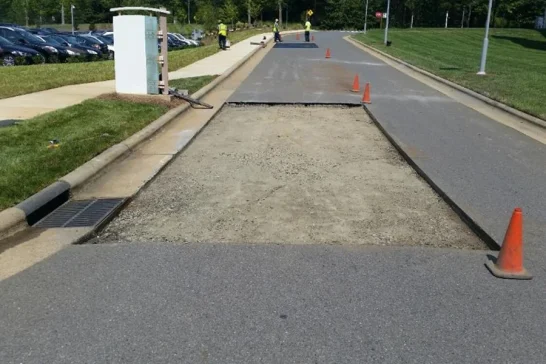
Not every pavement problem requires replacement. The challenge is knowing when a simple maintenance service is enough and when more extensive repairs are needed.
In general:
- Sealcoating protects asphalt that is still in good condition.
- Resurfacing restores worn pavement when the base remains stable.
- Repaving replaces pavement that has structural failure or base damage.
For more than 40 years, Carolina Asphalt has provided paving solutions for property owners across North and South Carolina. We help property owners choose the right solution based on pavement condition, budget, and long-term performance.
This guide explains what to know about sealcoating vs. resurfacing vs. repaving, including when asphalt sealcoating vs. resurfacing is the right comparison and when more extensive repairs may be needed.
Table of Contents
Sealcoating vs Resurfacing vs Repaving: Quick Comparison
| Factor | Sealcoating | Resurfacing | Repaving |
|---|---|---|---|
| Purpose | Protect existing asphalt | Restore worn surface | Replace failed pavement |
| Cost | Lowest | Moderate | Highest |
| Best For | Good-condition asphalt | Surface damage with a sound base | Structural failure |
| Lifespan Added | 2–4 years per application | 8–15 years | 20+ years |
| Appearance | Dark, refreshed finish | Looks like new asphalt | Brand-new pavement |
| Project Time | 1 day | 1–3 days | 3–7 days |
| Traffic Disruption | Low | Moderate | Highest |
| Base Repair Included | No | No | Yes |
| ROI | Excellent preventive value | Strong restoration value | Long-term replacement value |
Bottom line: Sealcoating protects asphalt that is still in good condition. Resurfacing restores moderately worn pavement when the base is stable. Repaving is typically required when damage extends into the pavement structure or foundation.
Not sure which option is right for your property? Schedule a professional asphalt evaluation to identify the most cost-effective solution before minor issues become major repairs.
What Is Sealcoating?
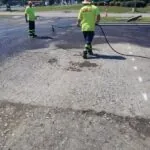
Sealcoating is a protective coating applied to the surface of existing asphalt to help shield it from UV rays, water penetration, oxidation, oil, and contaminants. Rather than repairing structural damage, sealcoating helps slow the aging process and preserves pavement that is still in good overall condition.
Sealcoating services are best for property owners whose asphalt is typically 10–15 years old or newer. The biggest advantage is cost-effective preventive maintenance that extends pavement life, improves appearance, and helps delay more expensive repairs.
Before sealcoating, property owners should address existing cracks to help prevent moisture intrusion. Learn more about crack filling and related pavement maintenance options to better understand how to choose the right maintenance strategy for your pavement.
What Is Asphalt Resurfacing?
Asphalt resurfacing, also known as an asphalt overlay, involves placing a new layer of asphalt over an existing pavement surface. When evaluating asphalt overlay vs. repaving, resurfacing is typically the preferred option when the underlying base remains stable.
This process restores appearance, improves ride quality, and addresses surface-level deterioration without removing the entire pavement structure.
Depending on pavement conditions, milling, patching, or other preparatory measures may be required before installing the new asphalt layer to support long-term performance.
What Is Repaving (Full Depth Reconstruction)?
Repaving, also known as full depth reconstruction, involves removing the existing asphalt and rebuilding the pavement from the ground up. This process allows contractors to correct structural issues that cannot be fixed through surface treatments or overlays alone.
Repaving is the best option when pavement has severe cracking, recurring potholes, drainage issues, or base failure. The process typically includes excavation, base repair or replacement, and installation of new asphalt. This creates the longest-lasting solution while addressing the root cause of pavement deterioration.
Cost Comparison: Sealcoating vs. Resurfacing vs. Repaving
Sealcoating is typically the most affordable option because it protects asphalt that is already in good condition. When comparing parking lot sealcoating vs. resurfacing, resurfacing requires a larger investment because it involves installing a new asphalt layer.
For properties with more significant damage, the decision often comes down to asphalt resurfacing vs. repaving, with repaving being the most extensive and costly solution.
Project costs vary based on:
- Pavement size
- Existing condition
- Crack filling
- Milling
- Drainage improvements
- Base repairs
- Striping
- Traffic control requirements
- Site accessibility
Durability and Lifespan Comparison
Sealcoating helps protect pavement and extend its service life, resurfacing can add years of performance by restoring the surface, and repaving offers the longest lifespan because it addresses both surface and structural issues.
The actual lifespan of any asphalt investment depends on factors such as traffic volume, climate conditions, drainage, installation quality, and ongoing maintenance.
When Each Option Makes Sense
The right solution depends on the condition of the pavement, not only on surface-level appearance.
| Choose... | When... |
|---|---|
| Sealcoating | The asphalt is in good condition with minor surface wear, limited cracking, and no structural issues. |
| Resurfacing | The pavement has moderate cracking, oxidation, or surface deterioration, but the base remains stable. |
| Repaving | The asphalt has severe cracking, recurring potholes, drainage problems, or underlying base failure. |
Concrete Parking Lots — Pros and Cons
| Pros | Cons |
|---|---|
| Longer potential lifespan | Higher upfront cost |
| Less routine maintenance | Longer installation and curing time |
| Handles heavy traffic well | More expensive repairs |
| Performs well in high temperatures | Can crack over time |
| Lighter surface can reduce heat absorption | May be susceptible to damage from deicing salts |
Schedule a professional inspection to determine when to sealcoat vs. resurface asphalt and whether parking lot resurfacing vs. repaving is the better long-term investment. In some cases, targeted asphalt repair solutions may be recommended before resurfacing or repaving.
Why a Professional Pavement Evaluation Matters
Surface cracks, potholes, and other visible damage do not always reveal the full extent of the problem. Underlying base failures or drainage issues can cause pavement to deteriorate from below, making a professional evaluation essential before choosing a repair solution.
Contact Carolina Asphalt for a professional asphalt evaluation and get expert recommendations based on your pavement’s actual condition.
Frequently Asked Questions
How often should I sealcoat my asphalt driveway or parking lot?
Most asphalt should be sealcoated every 2–3 years, depending on traffic levels and weather conditions. In the Carolinas, every 3 years is a common recommendation for maintaining protection and appearance.
Can you resurface over badly cracked asphalt?
Only if the underlying pavement structure is still sound. Extensive cracking may indicate base failure, making repaving a better long-term solution.
Parking lot resurfacing vs sealcoating: Which one do I need?
Parking lot resurfacing restores worn pavement and repairs surface damage, while sealcoating protects asphalt from water, UV rays, and oxidation. If the pavement is structurally sound but showing signs of wear, either option may be appropriate depending on its condition.
Blacktop sealcoating vs resurfacing: What's the difference?
Blacktop sealcoating adds a protective layer to preserve existing asphalt, while resurfacing adds a new layer of asphalt over the current surface. Resurfacing addresses more significant wear and deterioration than sealcoating alone.
How long does each option take to complete?
Sealcoating is typically completed in one day, with a cure time of 24 to 48-hours. Resurfacing usually takes 1–3 days, while repaving can take 3–7 days depending on project size and site conditions.
Is resurfacing better than sealcoating?
The right choice depends on the condition of the pavement. When comparing resurfacing vs sealcoating, sealcoating is best for preventative maintenance, while resurfacing is better for addressing surface-level deterioration and extending pavement life.