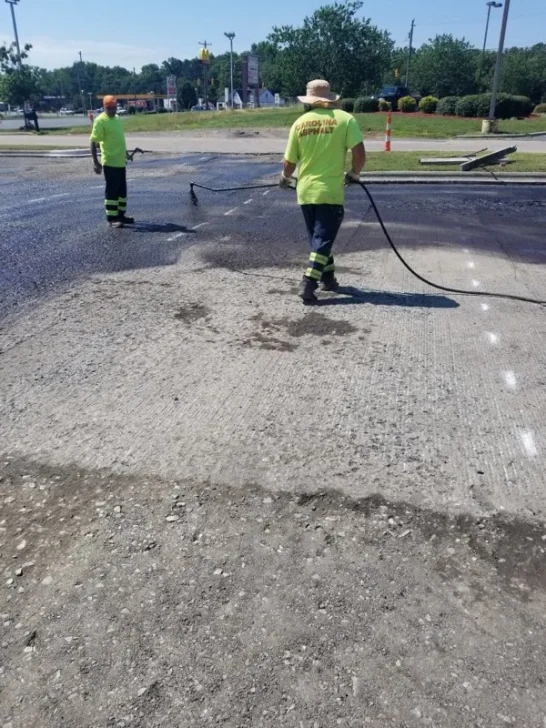
At a Glance: The Biggest Asphalt Sealcoating Cost Factors
- Total pavement size and condition
- Cleaning, crack filling, and repairs
- Sealcoating materials and application requirements
- Parking lot layout and accessibility
- Traffic control, phasing, and scheduling
Generic sealcoating averages offer a rough benchmark. But it’s important to evaluate proposals by scope rather than price alone, since asphalt sealcoating costs vary based on many factors.
Carolina Asphalt works with commercial properties throughout North Carolina and South Carolina, giving our team firsthand experience with the pavement conditions, preparation needs, and operational challenges that shape sealcoating projects. Below, we’ll break down what affects commercial asphalt sealcoating costs and what to consider when planning your project.
What Drives Asphalt Sealcoating Cost?
The cost of asphalt sealcoating depends on the scope of work required for the property. While every project is different, the following sealcoating pricing factors typically have the greatest impact on the final proposal.
Lot Size and Surface Area
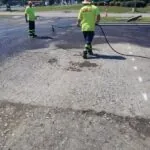
Larger paved areas require more sealer, labor, equipment time, and project coordination. Property managers can estimate their surface area with our asphalt calculator before requesting an on-site assessment.
Pavement Condition and Preparation Requirements
Pavement with debris, oil stains, vegetation, cracks, potholes, or deteriorated areas may require additional cleaning or repairs before sealcoating. Because sealcoating protects the pavement surface rather than fixing structural failures, your project may first require asphalt patching and pavement repair.
Sealcoating Materials and Application Specifications
Material selection and application requirements can affect sealer use, labor, and project duration based on pavement condition, traffic, exposure, and maintenance goals. When comparing proposals, property managers should review the specified product, application method, and number of coats rather than comparing the asphalt sealcoating price alone.
Site Layout, Accessibility, and Traffic Control
Islands, curbs, loading areas, multiple entrances, and other obstacles can complicate application. Active properties may also require phased closures, traffic control, delivery coordination, or multiple mobilizations to keep the site accessible during the project.
| Cost Factor | How It Can Affect Project Scope |
|---|---|
| Lot size | Changes material, labor, and equipment requirements |
| Pavement condition | May require additional preparation or repairs |
| Application specifications | Affects materials, labor, and project duration |
| Site layout and access | Can require additional coordination or phased work |
| Traffic control | May increase closures, mobilizations, and scheduling needs |
Commercial vs. Residential Sealcoating: What Affects Project Cost?
Unlike residential projects, commercial sealcoating cost reflects heavier traffic, complex layouts, access requirements, and the need to minimize disruptions to daily operations.
| Factor | Commercial Properties | Residential Driveways |
|---|---|---|
| Pavement area | Larger lots and drive lanes | Smaller paved areas |
| Traffic | Higher and more frequent | Lower and more predictable |
| Access | Multiple entrances and active traffic | Limited access concerns |
| Application | May require phased work | Typically simpler |
| Scheduling | Coordinated around operations | More flexible |
| Maintenance | Part of a broader pavement plan | Usually property-specific |
How Commercial Project Size and Layout Affect Scope
The cost to sealcoat a parking lot depends partly on its size and configuration, including islands, curbs, loading zones, fire lanes, and multiple entrances. Large open areas may improve application efficiency, while segmented or congested lots can require more labor and coordination.
How Sealcoating Fits Into a Commercial Pavement Maintenance Plan
Commercial asphalt sealcoating works best as part of a preventive maintenance plan that also considers cracks, patching, drainage, and pavement markings. Routine inspections and planned commercial sealcoating services can help property managers address maintenance needs before deterioration becomes more extensive.
Timing, Scheduling, and NC Climate Considerations
Temperature, precipitation, pavement conditions, and curing requirements all affect when crews can successfully complete sealcoating in North Carolina. Commercial projects may also require phased closures and coordination around customers, tenants, deliveries, and peak operating hours. These factors can increase parking lot sealcoating cost due to the overall project scope.
When to Pair Sealcoating with Repairs — and When Not To
Sealcoating is most effective when applied to pavement that is still structurally stable. If significant deterioration is present, addressing repairs first helps ensure the maintenance work matches the pavement’s actual condition.
When Pavement Repairs Should Come Before Sealcoating
Open cracks, potholes, failed patches, alligator cracking, depressions, and drainage-related damage often signal that the pavement needs repairs before sealcoating. If the pavement shows active or structural deterioration, a contractor should evaluate when asphalt repair is needed before sealcoating and determine the appropriate corrective work.
How Repair Needs Affect Sealcoating Project Scope
Crack filling, patching, cleaning, and other preparation can add to parking lot maintenance costs and the overall project scope. An on-site assessment will identify these needs, while an itemized proposal helps property managers distinguish preparation and repairs from the sealcoating work itself.
When Sealcoating May Not Be the Right Solution
Widespread pavement failure, recurring potholes, severe depressions, extensive alligator cracking, or drainage-related deterioration may require more than a surface treatment. A pavement contractor can assess sealcoating vs. resurfacing vs. full repaving and determine the right approach.
Does Your Pavement Need Repairs Before Sealcoating?
Your pavement may need further evaluation if you notice:
- Open or expanding cracks
- Potholes or failed patches
- Alligator cracking
- Depressions or uneven pavement
- Drainage or standing-water issues
- Areas with recurring deterioration
How to Evaluate a Commercial Sealcoating Proposal
The lowest bid does not always match the scope of a higher proposal. Compare what each contractor includes for preparation, repairs, application, access, scheduling, and other project requirements before deciding.
What a Commercial Sealcoating Proposal Should Include
A proposal should clearly define the pavement area, preparation and repairs, sealcoating material and application specifications, number of coats, phasing, curing considerations, and any warranty information. If these details are unclear, ask the contractor to explain exactly what is included so you can compare proposals on equal terms.
Red Flags to Watch for When Comparing Contractors
Be cautious of unsolicited “leftover material” offers, high-pressure sales tactics, or contractors unwilling to provide a defined scope of work, as these are among the common asphalt contractor scam tactics. Compare proposals that differ substantially in price for differences in preparation, repairs, application specifications, scheduling, and contractor qualifications.
Questions to Ask Before Signing
Before selecting a contractor, ask:
- What pavement preparation or repairs are included?
- What sealcoating material and application specifications will be used?
- How many coats are included, and what curing conditions are required?
- How will traffic, deliveries, and property access be managed?
- What insurance coverage and applicable credentials can you provide?
- How will you handle additional repair needs discovered during preparation?
FAQ — Asphalt Sealcoating Cost
How much does asphalt sealcoating cost?
Asphalt sealcoating cost varies based on pavement size and condition, preparation and repairs, application requirements, site access, and scheduling. An on-site assessment provides the most accurate commercial estimate.
How much does asphalt sealcoating cost per square foot in North Carolina?
There is no universal per-square-foot price because every commercial property has different conditions and requirements. Lot size, repairs, materials, accessibility, and project phasing can all affect the final cost.
What factors have the biggest impact on commercial parking lot sealcoating cost?
The biggest factors include pavement size and condition, preparation and repairs, application specifications, site layout, traffic control, and scheduling. More extensive repairs or complex access requirements can increase project scope.
How often does commercial asphalt need sealcoating?
We recommend sealcoating every 2-3 years, but frequency depends on pavement condition, traffic, weather exposure, previous maintenance, and the materials used. Regular pavement inspections can help determine when sealcoating is appropriate.
Should asphalt repairs be completed before sealcoating?
Pavement with cracks, potholes, failed patches, drainage issues, or other deterioration may require repairs first. Sealcoating protects the surface but does not correct structural pavement problems.