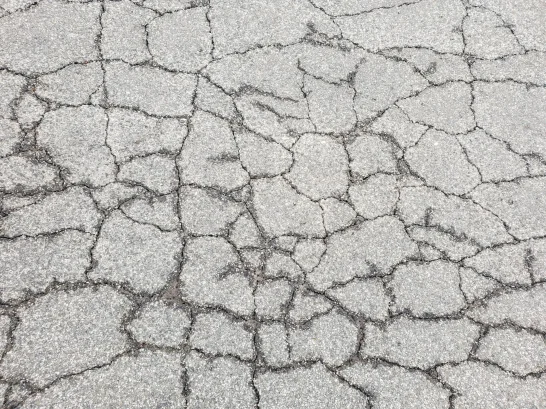
Winter in the Southeast isn’t always consistent, and that’s exactly what makes it tough on pavement. Unlike regions that experience consistently freezing temperatures, the Carolinas and other parts of the Southeast often see frequent temperature swings above and below freezing. Combined with rainfall and overnight cold snaps, these conditions create ideal circumstances for damage caused by the freeze-thaw cycle.
While the effects aren’t always immediately noticeable, repeated freezing and thawing can gradually weaken asphalt, turning minor surface imperfections into larger problems that impact safety, appearance, and pavement life.
How Does the Freeze-Thaw Cycle Work?
1. Water Seeps into Small Cracks and Joints – Rainfall and melting frost allow moisture to enter existing cracks, openings, and other surface imperfections.
2. Cold Temperatures Cause the Moisture to Expand – As temperatures drop, trapped water freezes and expands, putting pressure on the surrounding asphalt and widening existing cracks.
3. Repeated Freezing and Thawing Weakens the Surface – When temperatures rise, the ice melts and leaves behind larger openings for additional moisture to enter. As the cycle repeats, the pavement becomes increasingly vulnerable to deterioration.
Over time, this repeated stress can compromise the pavement surface and underlying base, leading to more extensive damage.
Common Signs of Freeze-Thaw Damage
Freeze-thaw cycles can affect the pavement in several ways. Property owners should keep an eye out for these common warning signs, especially during periods of fluctuating winter temperatures:
- Expanding Cracks
- Potholes
- Surface Deterioration
- Uneven Surfaces
Protect Your Pavement Before Winter Takes Its Toll
At Carolina Asphalt, we help property owners stay ahead of winter damage with proactive crack filling, patching, and pavement evaluations. Our team can identify early warning signs and recommend maintenance solutions based on your property’s specific needs.
Addressing issues now helps protect your surfaces through winter and prepares your property for safer, smoother conditions in the spring.
Small repairs today can prevent major problems later. Let’s take a look before winter takes its toll.