ADA Parking Requirements for Commercial Parking Lots in Charlotte
We help commercial properties across North Carolina and South Carolina understand and implement ADA parking requirements so every visitor can access your business safely and confidently.
Commercial ADA Parking Solutions for Businesses Across the Carolinas
So what is ADA parking, and how does it impact your business? ADA parking refers to designated spaces that meet the Americans with Disabilities Act accessibility requirements. These include specific stall dimensions, access aisles, signage, markings, routing paths, and proper slopes, all designed to provide safe access for individuals with disabilities.
ADA rules apply to nearly every commercial parking lot open to the public, so ADA compliance is essential for commercial properties of all kinds. Additionally, compliant lots lead to more positive customer experience and protect businesses from liability.
Carolina Asphalt provides complete ADA parking layout, striping, signage, and pavement improvement solutions across the Carolinas. Our self-performing teams ensure every detail meets federal and local guidelines while minimizing disruptions to your daily operations.
Why ADA Parking Compliance Matters for Your Property
ADA parking compliance protects your business from expensive fines and lawsuits, prevents visitor injuries, and ensures your site provides safe access for all drivers and pedestrians. Improper stall counts, missing van-accessible spaces, slope issues, or faded striping can quickly lead to violations and, in severe cases, injury-related claims.
Even pavement conditions can affect compliance. For example, open potholes create tripping hazards and can make an access aisle unusable. Addressing issues early with services like pothole repair helps reduce liability while maintaining a safe, accessible route from parking to entrances.
ADA compliance is required for nearly all commercial and municipal properties, including:
- Retail centers and shopping plazas
- Medical and healthcare facilities
- Schools and universities
- Municipal and government buildings
- Industrial and warehouse sites
- Office and corporate campuses
- Multifamily communities and HOAs
For property managers and owners, staying compliant isn’t optional. It is a critical part of risk management, visitor safety, and regulatory responsibility.
Understanding ADA Handicap Parking Requirements
Nearly every commercial property that provides parking for employees, customers, or visitors must follow ADA handicap parking requirements. These standards are set at the federal level, but they are enforced by state and local agencies, zoning inspectors, and even private individuals who file complaints. That means your parking lot must meet both ADA standards and any additional local rules in North Carolina or South Carolina.
Carolina Asphalt helps property owners navigate these requirements with a detailed ADA assessment, ensuring your lot meets stall counts, layout standards, slope tolerances, signage rules, and routing expectations. Our team stays updated on ADA regulations so your site remains compliant from the first layout drawing to the final striping.

Required Handicap Parking Spots & Layout Standards
The number of accessible parking spaces your lot needs depends on your total parking count. According to the ADA website, facilities must provide a specific ratio of standard and van-accessible spaces based on the lot size.
How Many Handicap Parking Spots Do You Need?
Accessible stall requirements follow ADA’s national ratio guidelines. For example:
A 50-space parking lot requires at least 2 accessible spaces
A 100-space lot requires at least 4 accessible spaces
A 500-space lot requires at least 9 accessible spaces, including van-accessible stalls
Facilities with 1,000+ spaces follow additional percentage-based rules requiring more van-accessible spaces.
Medical facilities also follow stricter requirements. Outpatient centers often need 10% of their total parking to be ADA-accessible, while rehabilitation facilities may require 20%.
Carolina Asphalt ensures your parking lot meets the correct ratios and layout rules before striping begins.
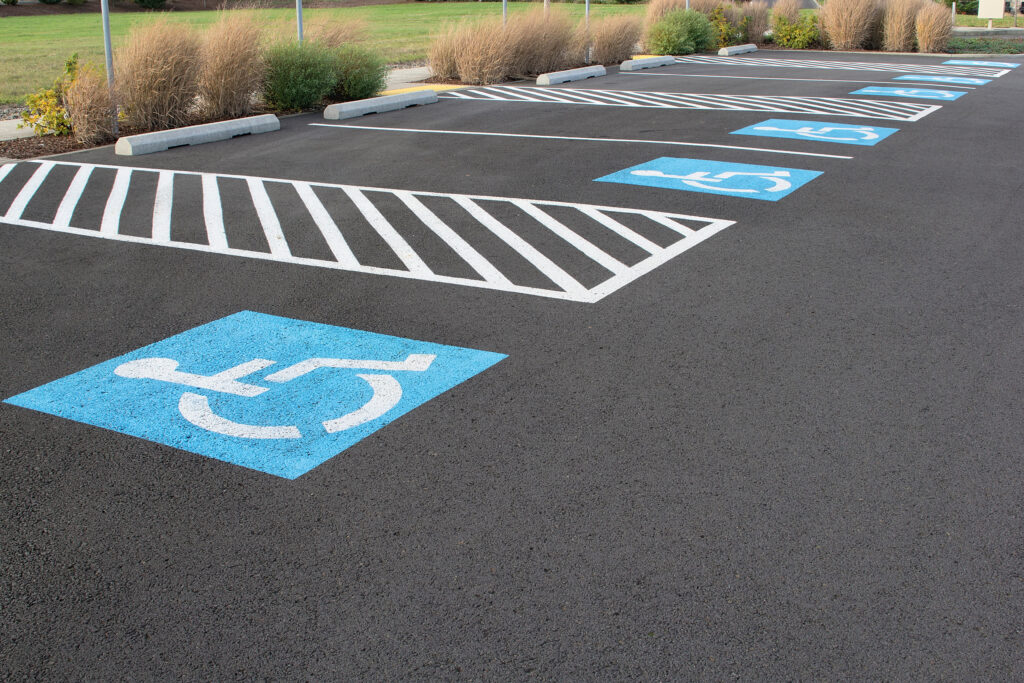
ADA Stall Dimensions & Access Aisle Requirements
Every ADA parking space must provide maneuverability, clear aisle space, and accessible routes to building entrances. Standard parking stalls and van-accessible stalls each follow specific measurements:
- Standard accessible stall width: 8 feet
- Access aisle width: 5 feet minimum
- Van-accessible stall width: 11 feet (or 8 feet with an 8-foot aisle)
- Vertical clearance for vans: 98 inches
- Cross slope requirement: Max 1:48 for both stall and access aisle
Access aisles must connect to an ADA-compliant route leading to the entrance without steps, dips, or barriers. Our team checks slope tolerances, pavement conditions, and walkway alignment to ensure the entire path meets current ADA stall dimension standards.
ADA-Compliant Accessible Parking Signs & Markings
Clear, visible, and properly placed accessible parking signs are required for every handicap parking spot. Signs must be readable year-round and are required to be positioned so parked vehicles cannot block visibility.
Sign Height, Placement & Visibility
Carolina Asphalt installs ADA-compliant signage according to federal guidelines:
- Minimum 60-inch sign height measured to the bottom of the sign
- Higher mounting for van-accessible signage when feasible
- Permanent posts (not wheel stops or curbs)
- Reflective lettering and symbols for nighttime visibility
Proper sign placement ensures enforcement and prevents misuse of designated spaces.
Striping Colors, Symbols & Thermoplastic Markings
ADA striping must follow strict color and symbol requirements:
- Blue striping for ADA stalls and access aisles
- Standard white or blue wheelchair symbols
- Cross-hatched lines for aisles to prevent vehicle encroachment
- Thermoplastic or high-durability coatings for long-lasting visibility
Thermoplastic markings provide superior durability, helping maintain compliance even under heavy traffic and year-round weather conditions.
Asphalt Conditions That Can Make Your ADA Parking Non-Compliant
ADA accessibility goes beyond stall counts and signage. Pavement conditions also play a significant role. Even minor deterioration can make a previously compliant parking space unusable or unsafe.
Common issues that affect ADA compliance include:
- Slope changes or settlement that create dips or uneven access aisles
- Surface cracking that disrupts wheelchair or walker movement
- Open potholes that pose tripping hazards
- Drainage issues that create standing water in access aisles
- Faded striping that reduces visibility for drivers
- UV wear that breaks down paint, markings, and surface coatings
ADA rules require smooth, stable, and slip-resistant surfaces. Carolina Asphalt evaluates your slope percentages, surface condition, routing paths, and drainage to determine which repairs are needed to bring your lot back into compliance.
ADA Parking Lot Services We Provide
Carolina Asphalt delivers full-service ADA parking upgrades, layout redesigns, repairs, and maintenance to keep your site fully accessible. Our self-performing crews handle every stage of the project, ensuring consistent quality and compliance.
- ADA Layout & Parking Lot Re-Design
We evaluate your existing parking lot configuration and redesign it to meet current ADA rules. This includes proper stall placement, van-accessible spaces, cross-hatched aisles, and routes to building entrances.
- Asphalt Repairs for ADA Compliance
Our asphalt repair team fixes structural issues that affect accessibility, including leveling, slope correction, crack repair, and pothole repair. This ensures all accessible spaces meet ADA slope and surface requirements.
- ADA Striping & Accessible Sign Installation
We provide full installation and re-striping using commercial-grade coatings and thermoplastic markings. Carolina Asphalt also installs ADA-compliant signs, post-mounted hardware, and reflective lettering to ensure proper visibility.
- Curb Ramps, Sidewalk Access & Walkways
We construct and repair ADA-compliant curb ramps and walkways to ensure safe, accessible routes from parking areas to building entrances. When needed, we integrate concrete elements using solutions like concrete curbing to support proper routing and grade transitions.
Our Commercial ADA Parking Compliance Process
Our ADA compliance process ensures your property meets federal, state, and local accessibility standards from start to finish.

ADA Compliance Assessment
We evaluate stall counts, pavement conditions, slopes, access aisles, sign locations, and routing paths.

Planning + ADA Stall Dimensions Layout
We reference federal, state, and local accessibility standards to determine the correct number of accessible spaces, update layouts, and design compliant signage and access routes.

Pavement Repairs & Leveling
If slope or surface issues exist, we perform structural repairs, leveling, and grading to restore ADA-compliant conditions.

triping, Signage & Markings
We apply fresh striping, install new ADA signs, and add thermoplastic symbols and cross-hatching for durability.

Final ADA Verification
Before reopening the area to traffic, we confirm complete ADA and state-level compliance.
Why Choose Carolina Asphalt for ADA Parking Compliance
With over 40 years of experience in commercial asphalt, striping, and accessibility improvements, Carolina Asphalt is one of the Carolinas’ leading providers of ADA-compliant parking solutions. Our teams are meticulously trained in ADA layout design, signage installation, pavement correction, and long-term maintenance strategies.
Here’s what sets us apart:
- Self-performing asphalt, concrete, striping, and signage crews
- Ability to phase projects around your business hours
- Full-service ADA layout, striping, and repair capabilities
- Rapid response for high-priority compliance corrections
- Long-term pavement maintenance expertise
- Commercial service coverage across North Carolina and South Carolina
We also provide safety upgrades when needed, using high-visibility materials and options found in ourSafety Features services.

ADA Parking Requirements FAQs
What is ADA parking?
ADA parking refers to designated parking spaces that meet accessibility standards for individuals with disabilities. These spaces include specific stall widths, access aisles, signage, and surface slopes that must meet ADA parking requirements.
What type of handicapped parking signs are required?
Accessible spaces must use permanent signs with reflective lettering, mounted at least 60 inches high. Van-accessible spaces require additional signage.
How often should ADA parking lot striping be repainted?
Most lots need fresh striping every 1–2 years. Heavy traffic, UV exposure, and weather conditions can speed up fading. Many properties repaint on an annual maintenance cycle through services like parking lot striping.
Can you upgrade an older lot to meet current regulations?
Yes. Carolina Asphalt can re-stripe, redesign layouts, update signs, correct slopes, and repair pavement to bring older lots up to current ADA standards.
Request an ADA Parking Compliance Assessment
If your parking lot needs updated ADA striping, signage, layout adjustments, or a full compliance review, Carolina Asphalt is here to help. We provide ADA assessments, layout redesigns, pavement repairs, and compliant striping services for commercial properties across North Carolina and South Carolina.
Get started with a free ADA parking evaluation today. Contact Us to schedule your assessment.
Our Service Areas
We serve clients throughout North Carolina and South Carolina. Wherever you are, we’ll come to you. We’ll meet your needs right the first time. Carolina Asphalt is the trusted name for reliable maintenance, repair, and installation services near you.
North and South Carolina’s Premier Asphalt and Concrete Provider
- Charlotte
622 E Westinghouse Blvd.
Charlotte, NC 28273
Have a job outside of our service area? Our partners are here to help.