Commercial Concrete Flatwork Services in Charlotte & the Carolinas
From sidewalks to loading docks, concrete flatwork keeps commercial properties in the Carolinas moving.
What Is Concrete Flatwork? (And Why It Matters for Commercial Properties)
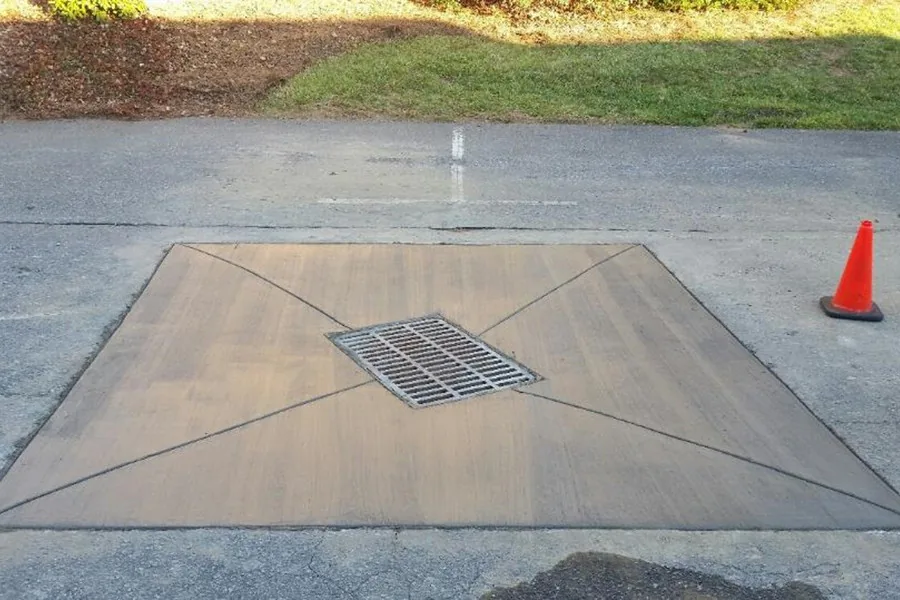
Concrete flatwork refers to horizontal concrete surfaces installed at or near ground level. This includes sidewalks, parking pads, dumpster pads, loading dock approaches, equipment slabs, and warehouse floors. Unlike structural concrete used for walls or foundations, flatwork focuses on durable surfaces designed to support traffic and maintain safe access across a property.
On commercial sites, these surfaces handle a lot of everyday activity. Delivery trucks drive across them, employees and visitors walk on them, and equipment may remain in place for extended periods. When concrete flatwork is installed properly, it can perform reliably for decades.
Conditions in the Carolinas make proper installation especially important. Heavy rainfall, shifting clay soils, and occasional freeze-thaw cycles can place stress on concrete over time, which is why grading, reinforcement, and joint placement all play an important role during installation.
Many commercial projects also include additional elements that help manage drainage and traffic flow. In these situations, well-designed concrete curbing helps guide water away from buildings while keeping pedestrian and vehicle areas clearly defined.
Request a Commercial Concrete Flatwork Estimate
A team member will contact you once you complete the form below.
Commercial Concrete Flatwork Applications
Walk around any commercial property, and you will see concrete surfaces doing important work. Sidewalks guide foot traffic, loading areas accommodate delivery trucks, and equipment pads support critical building systems. These surfaces may look simple, but building them correctly takes careful planning.
At Carolina Asphalt, we install concrete flatwork for developers, property managers, and facility operators across Charlotte and the surrounding areas in the Carolinas. Every project is planned around traffic patterns, drainage, and long-term durability so the finished surface performs the way the site demands.
Common commercial concrete flatwork applications include:
- Parking Lot Concrete Pads & Aprons
These areas help transition traffic between parking surfaces and nearby buildings, creating durable entry points that handle constant vehicle use.
- Dumpster Enclosure Pads & Trash Pad Areas
Reinforced concrete pads built to support heavy dumpsters and the service trucks that empty them on a regular basis.
- Loading Dock Approaches & Truck Courts
Concrete surfaces designed for the turning, braking, and loading activity that comes with delivery vehicles.
- Equipment Pads & Mechanical Room Slabs
Solid concrete bases that support HVAC systems, generators, and other building equipment that needs a stable foundation.
- Commercial Sidewalks & Pedestrian Walkways
Concrete walkways that guide employees and visitors through a property while helping sites stay compliant with accessibility standards outlined in ADA parking requirements.
- Fire Lane Surfaces & Emergency Access Pads
Reinforced concrete areas that provide reliable access for emergency vehicles and meet municipal safety requirements.
- Warehouse & Industrial Floor Slabs
Interior concrete slabs are built to support forklifts, pallet jacks, and the daily movement of materials inside industrial spaces.
- ADA-Compliant Access Routes & Ramps
Carefully graded concrete paths and ramps help ensure safe, accessible movement throughout commercial properties.
Many commercial developments also combine flatwork with surrounding pavement to create a clear traffic layout. For example, heavy-duty loading areas may use concrete, while surrounding parking areas are installed through commercial asphalt paving.
The Commercial Concrete Flatwork Process
Good concrete work starts long before the first truck arrives on site. Proper planning and preparation help ensure the finished surface drains correctly, supports traffic, and performs reliably over time. At Carolina Asphalt, we approach each project with careful planning and site preparation before any concrete is placed.
Here is how we work:
1. Site Evaluation & Grade Assessment
We begin by evaluating slope, drainage patterns, and soil conditions to determine how the surface should be graded before construction starts.
2. Subgrade Preparation
Our crews excavate and compact the soil to create a stable base. When needed, we install an aggregate layer to improve drainage and provide stronger support for the slab.
3. Form Setting & Layout
Forms establish the final shape, edges, and elevation of the concrete surface so it aligns properly with surrounding pavement and structures.
4. Reinforcement Placement
Depending on how the area will be used, we install reinforcement such as rebar or wire mesh to help the slab handle vehicle traffic and equipment loads.
5. Concrete Pour & Finishing
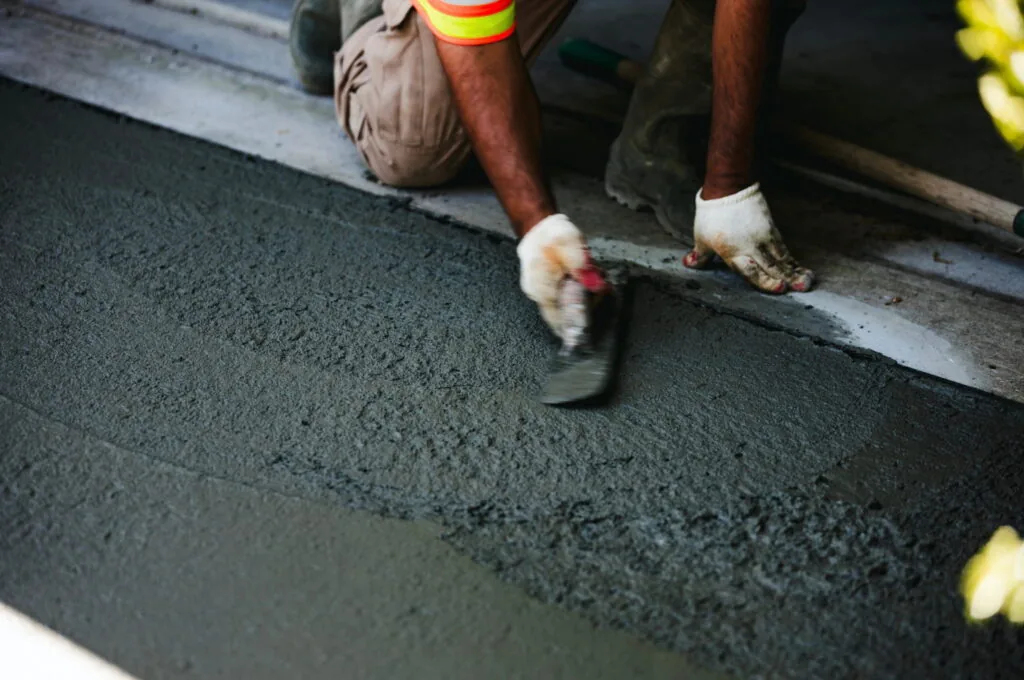
Concrete is poured and finished according to the needs of the surface. Commercial slabs often use mixes rated at 4,000 PSI or higher and may receive broom or troweled finishes for traction.
6. Joint Cutting
Control joints and expansion joints are placed to guide natural movement in the concrete as it cures and responds to temperature changes.
7. Curing
Proper curing allows the concrete to reach full strength and helps protect the surface during the early stages after placement.
Concrete vs. Asphalt — Choosing the Right Surface for Your Commercial Site
Many commercial properties rely on both concrete and asphalt, using each material where it performs best. High-load areas often benefit from concrete, while larger parking areas are commonly paved with asphalt for cost efficiency.
| Factor | Concrete | Asphalt |
|---|---|---|
| Lifespan | 25–40+ years with proper installation | 15–25 years with routine maintenance |
| Upfront Cost | Higher initial investment | Lower installation cost |
| Maintenance Needs | Occasional joint sealing | Regular sealcoating and crack repair |
| Load Capacity | Handles heavy trucks and equipment well | Suitable for vehicle traffic |
| Heat Performance | Reflects heat and stays cooler | Absorbs heat and can soften in extreme temperatures |
| Repair Options | Individual slabs can be replaced | Patching, infrared repair, or overlays |
Concrete is commonly used for dumpster pads, loading dock approaches, and equipment slabs, while surrounding parking areas are often installed through commercial asphalt paving. The right choice comes down to how the area will be used, its traffic, and what your long-term maintenance priorities are.
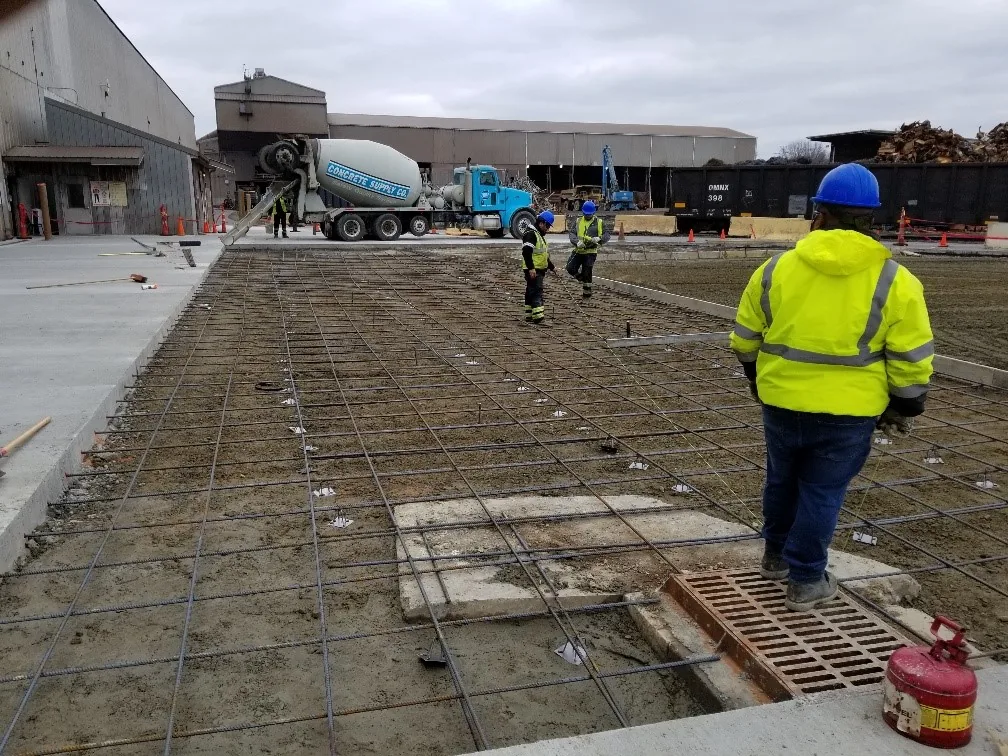
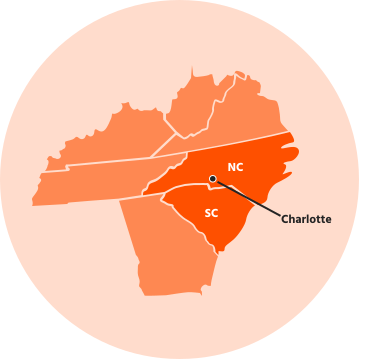
Serving Commercial Properties Across North & South Carolina
Carolina Asphalt installs commercial concrete flatwork throughout Charlotte and across North and South Carolina, working with businesses, developers, and property managers throughout the region. Our crews regularly work with businesses, developers, and property managers across the region to install durable concrete surfaces that support daily operations.
We provide flatwork services for a wide range of commercial property types, including:
- Retail And Mixed-Use Developments
- Industrial And Manufacturing Facilities
- Healthcare Campuses And Medical Office Parks
- Municipal And Government Facilities
- HOAs And Multi-Family Communities
- Educational Institutions
Why Choose Carolina Asphalt for Commercial Concrete Flatwork
Anyone can pour concrete. Getting it right on a busy commercial site takes planning, experience, and a crew that understands how these surfaces will be used every day. At Carolina Asphalt, we install concrete flatwork designed to support the long-term performance of commercial properties.
Our approach includes:
- Commercial-Only Expertise
We focus on commercial properties, so our team understands the traffic demands, safety requirements, and scheduling considerations that come with busy sites.
- Experienced Crews Across The Carolinas
Our crews work throughout North and South Carolina and are familiar with the soil conditions, weather patterns, and site challenges that come with building concrete surfaces in this region.
- Mix Design And Reinforcement Built For Your Site
Every project is planned around how the surface will be used, from expected traffic loads to site conditions, so the finished concrete performs the way it should.
- Scheduling That Works Around Business Operations
We plan construction schedules carefully to help keep businesses accessible and minimize disruption for employees, customers, and deliveries.
- Clear Project Scoping
Our team takes the time to evaluate the site and recommend the work that actually makes sense for the property.
- Licensed, Insured, And Accountable
Your project is completed by our in-house crews, who take pride in the quality of their work and stand behind the results.
Concrete Flatwork FAQs
What is concrete flatwork?
Concrete flatwork refers to horizontal concrete surfaces installed at or near ground level. This includes sidewalks, dumpster pads, loading dock approaches, equipment slabs, and warehouse floors. On commercial properties, these surfaces are built to handle traffic while maintaining safe access and proper drainage.
How thick should commercial concrete flatwork be?
The thickness of commercial flatwork depends on how the surface will be used. Sidewalks and light-use areas are typically around four inches thick. Areas that support vehicles often require five to six inches, while loading docks and heavy truck areas may need six to eight inches or more with reinforcement. A site evaluation helps determine the right thickness for the project.
How long does concrete flatwork last on a commercial site?
When installed properly, commercial concrete flatwork can last 25 to 40 years or longer. Its lifespan depends on factors such as base preparation, concrete mix design, drainage, and joint placement. In the Carolinas, good base preparation is especially important because clay soils can shift as moisture levels change.
What is the difference between a control joint and an expansion joint?
Control joints are placed in the concrete to guide where natural cracking occurs as the slab cures and shrinks. Expansion joints are installed where concrete meets buildings or other slabs so the material can expand and contract with temperature changes. Both help protect the long-term performance of commercial flatwork.
Can concrete flatwork be installed in phases to minimize business disruption?
Yes. Large commercial projects are often completed in phases, so portions of the property can remain open during construction. Our team plans each project carefully to help businesses stay accessible while improvements are underway.
When does commercial flatwork need to be replaced instead of repaired?
Small cracks or localized damage can often be repaired. Replacement is usually recommended when the base has failed, slabs have settled significantly, or cracking is widespread across the surface. A site evaluation helps determine whether repair or replacement makes the most sense.
Request a Commercial Concrete Flatwork Estimate in Charlotte
Every successful commercial concrete project starts with understanding the site. Our team evaluates drainage, traffic patterns, and load demands before recommending the right approach for your property. That early planning helps ensure the finished surface performs the way a commercial site needs it to.
At Carolina Asphalt, we install concrete flatwork for commercial properties throughout the Carolinas. If you’re planning improvements to a loading area, sidewalk system, equipment pad, or other concrete surface, request a site evaluation, and we’ll help you find the ideal solution for your commercial space.
Our Service Areas
We serve clients throughout North Carolina and South Carolina. Wherever you are, we’ll come to you. We’ll meet your needs right the first time. Carolina Asphalt is the trusted name for reliable maintenance, repair, and installation services near you.
North and South Carolina’s Premier Asphalt and Concrete Provider
- Charlotte
622 E Westinghouse Blvd.
Charlotte, NC 28273
Have a job outside of our service area? Our partners are here to help.