ADA parking lot compliance is more than painting a wheelchair symbol on the pavement. It involves correctly calculating space counts, laying out stalls and access aisles, managing slopes, installing proper signage, and ensuring there is a safe, usable route from parking areas to the building entrance.
If these elements are missed or handled incorrectly, the risks add up quickly. Property owners and managers can face ADA complaints, costly re-striping, unexpected site modifications, and potential fines. At Carolina Asphalt, we want to make sure your pavement is built with state and federal regulations in mind.
While the Americans with Disabilities Act (ADA) establishes federal standards, state and local codes can add additional requirements. Our guide will go over the basic ADA parking lot requirements at the state and federal levels, to help your business stay compliant.
What Is ADA Parking?
ADA parking refers to a system of accessible parking spaces, access aisles, and a continuous accessible route that allows people with disabilities to exit their vehicles and safely reach an accessible building entrance. ADA parking lot compliance applies to:
- Businesses open to the public
- Nonprofit organizations
- Government facilities
- Any site that provides parking for employees, customers, or visitors
ADA parking means more than just a specific parking spot near the building entrance. The stall, the access aisle next to it, and the route leading to the entrance must all work together to create an accessible route.
What is an accessible route? In simple terms, it’s the shortest usable path from an accessible parking space to an accessible entrance. This path must be firm, stable, slip-resistant, and free of obstacles. It does not have to be the physically closest parking stall, but it must be the most practical route someone using a wheelchair, walker, or mobility device can safely travel.
ADA vs. North Carolina Requirements
The ADA establishes baseline federal standards. These rules apply nationwide and outline minimum parking lot requirements for parking space counts, dimensions, slopes, signage, and accessible routes.
North Carolina also enforces state building code accessibility provisions that can influence how parking lots are designed, striped, inspected, and approved. In North Carolina, Chapter 11 of the building code often affects layout expectations and inspection outcomes, particularly during new construction, resurfacing, or significant site changes.
For property owners, this means that federal ADA compliance alone isn’t enough. To reduce the risk of failed inspections or rework, parking lots should meet both ADA standards and applicable state or local code requirements.
A qualified paving professional can help ensure your parking lot aligns with federal ADA standards while accounting for local and regional code expectations. If you’re restriping, repaving, or changing your layout, treat it like a compliance refresh, not just new paint.
How Many Accessible Parking Spaces Are Required?
The number of required handicap parking spaces is based on the total number of parking spaces in each parking facility. This means each parking lot or garage is calculated separately, even if multiple lots serve the same building.
Two important baseline rules apply:
- Accessible space counts are calculated per parking facility, not across an entire site.
- At least one of every six accessible spaces must be van-accessible.
ADA Accessible Parking Space Count Table
Total Parking Spaces
Required Accessible Spaces
1-25
1
26-50
2
51-75
3
76-100
4
101-150
5
151-200
6
201-300
7
301-400
8
401-500
9
501-1,000+
2% of the total number of spots
Example: A parking lot with 120 total spaces requires 5 accessible parking spaces, and at least one must be van-accessible.
ADA Parking Space Dimensions and Layout
Meeting the correct number of spaces is only part of ADA parking requirements. Each accessible space must also meet specific dimensional, slope, and surface quality standards to be usable.
Total Parking Spaces
Required Available Spaces
1-25
1
Standard Accessible Stall and Access Aisle
A standard car-accessible parking space must include:
- Stall width: 96 inches minimum
- Access aisle width: 60 inches minimum
- Slope: Maximum of 1:48 (approximately 2.08%) in all directions
- Surface: Firm, stable, and slip-resistant
The access aisle allows room for vehicle ramps, lifts, and safe transfers. If the stall dimensions are correct but the aisle is too narrow or improperly sloped, the space is not compliant.
Van-Accessible Parking Options
Van-accessible parking spaces require additional width or aisle space to accommodate side-loading ramps and lifts. The ADA allows two compliant layout options:
Option A
- 132-inch wide parking space
- 60-inch wide access aisle
Option B
- 96-inch wide parking space
- 96-inch wide access aisle
In areas where vertical clearance applies, such as parking garages or covered facilities, van-accessible spaces, access aisles, and routes must provide at least 98 inches of vertical clearance.
Access Aisles and Shared Aisles
Access aisles must:
- Run the full length of the parking space
- Be clearly marked to discourage parking
- Connect directly to an accessible route
In many layouts, two accessible spaces may share a single access aisle. However, angled parking and certain site conditions may limit when shared aisles are permitted.
Location Matters: Shortest Accessible Route to the Entrance
Accessible parking spaces must be located on the shortest route to an accessible entrance. This does not always mean the closest physical stall, but it does mean the most practical route without barriers.
Compliant layouts avoid:
- Forcing pedestrians behind parked vehicles
- Requiring travel through traffic lanes without protection
- Creating breaks in the accessible route

ADA Compliant Parking Lot Striping and Markings
Even when spaces are correctly sized and located, unclear or faded ADA markings can make accessible stalls and access aisles unusable.
ADA-compliant parking lot striping should:
- Clearly define parking stall widths and access aisle boundaries
- Mark access aisles to discourage parking or standing
- Maintain strong visual contrast against the pavement surface
The ADA does not mandate a specific paint color, but markings must be visible and easy to understand. Many state and local jurisdictions have additional preferences or requirements related to color contrast, so it’s important to confirm local expectations before restriping.
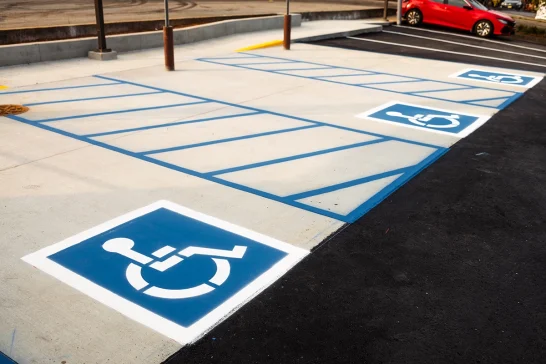
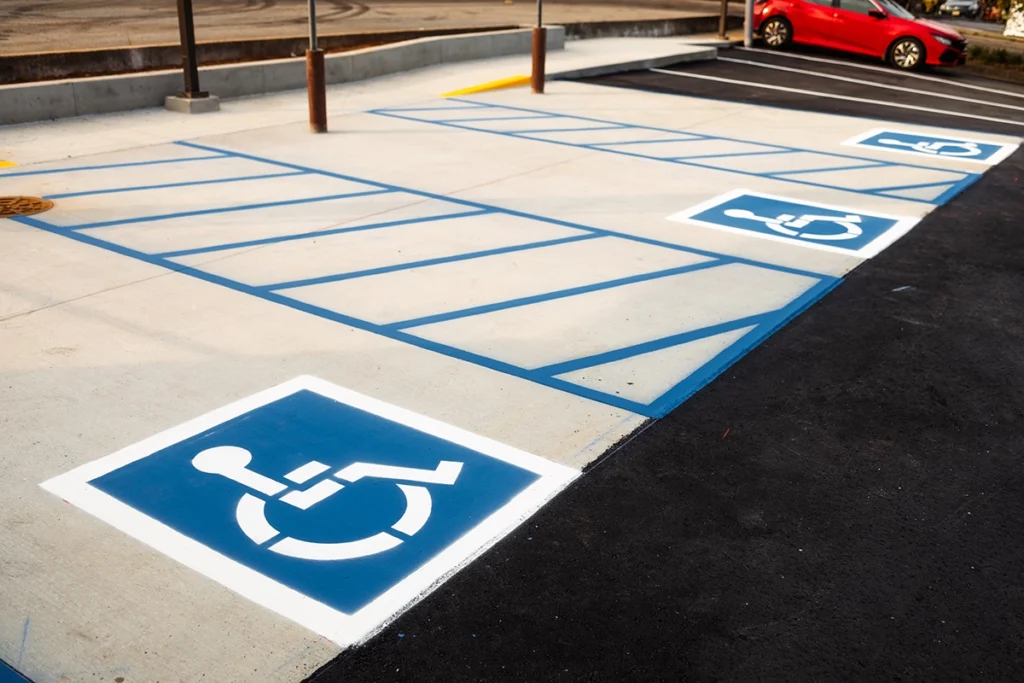
Common pavement markings include:
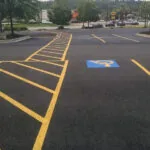
- Stall boundary lines
- Hatched access aisles with “NO PARKING” markings
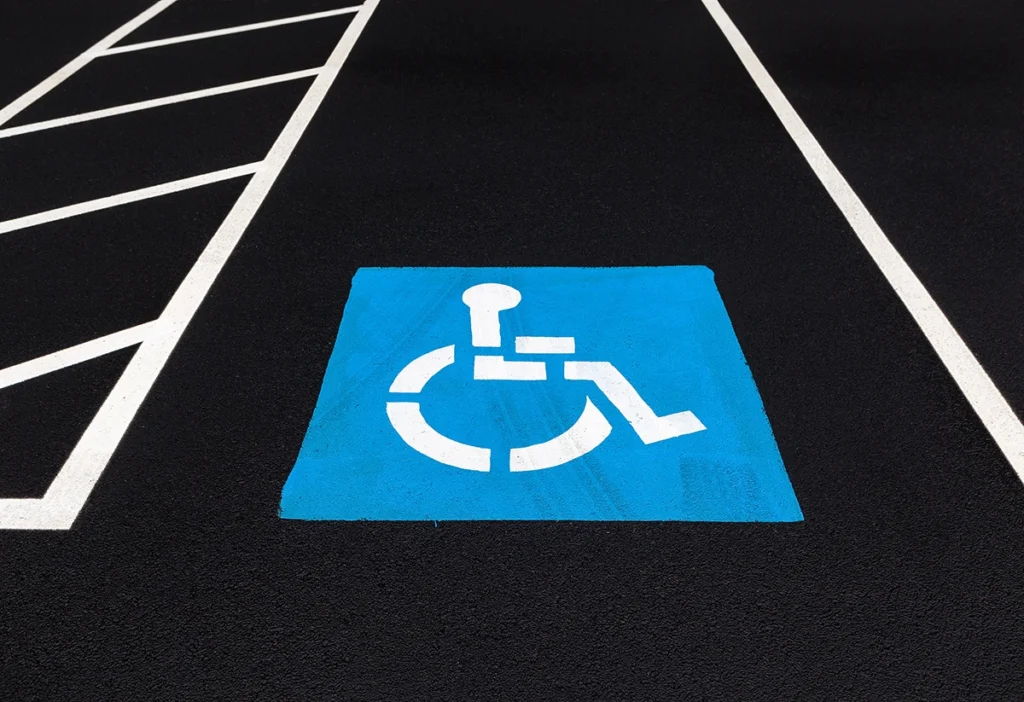
- The International Symbol of Accessibility painted within the stall
When restriping or refreshing markings, it’s important to confirm that stall and aisle widths have not drifted from ADA minimums during layout adjustments. This is especially important after sealcoating or resurfacing projects.
Signage Requirements and Placement
In addition to pavement markings, each accessible parking space must include compliant signage. Signs ensure accessible spaces remain identifiable even when vehicles cover pavement markings.
ADA signage requirements include:
- Displaying the International Symbol of Accessibility
- Mounting signs so the bottom of the sign is at least 60 inches above the ground
- Installing additional “van accessible” designation signs for van-accessible spaces
State and local regulations may also specify additional enforceability language or formatting requirements. Before installing signage, it’s best to double-check with North Carolina or local rules to make sure your parking lot remains compliant.
Common ADA Parking Lot Compliance Mistakes
Many ADA violations occur not because of intentional neglect, but because parking lots change over time. Repairs, resurfacing, restriping, and settling can all introduce compliance issues.
Some of the most common mistakes include:
- Faded striping that makes access aisles difficult to identify
- Incorrect stall or aisle widths after restriping
- Slopes exceeding the 1:48 maximum due to settlement or poor grading
- Access aisles that do not connect to a continuous accessible route
- Signs mounted too low or missing required van-accessible designations
- Curb ramps positioned improperly so they protrude into access aisles
How to Maintain ADA Parking Lot Compliance Over Time
ADA parking lot compliance is not a one-time project. Pavement conditions change, markings fade, and layouts can fall out of compliance after maintenance or repairs. Ongoing attention helps prevent small issues from turning into costly corrections.
A practical maintenance approach includes:
- Re-striping accessible stalls and access aisles before markings fade
- Repairing cracks, potholes, or any settlement that creates barriers along accessible routes
- Keeping accessible routes clear of obstructions such as curbing changes, stored materials, or signage posts
- Verifying that parking signs remain visible, properly mounted, and undamaged
- Rechecking stall dimensions and slopes after sealcoating, patching, or layout changes
Quick ADA Parking Lot Compliance Checklist
- Count total spaces per lot or garage and calculate the required accessible and van-accessible spaces
- Verify that stall widths and access aisle dimensions meet ADA minimums
- Confirm slopes do not exceed 1:48 across stalls and access aisles
- Place accessible spaces on the shortest accessible route to an accessible entrance
- Stripe access aisles clearly and mark them to discourage parking
- Install compliant signage at the correct height with the required van designation
- Document the final layout with photos and measurements for records
Quick ADA Parking Lot Compliance Checklist
ADA parking lot compliance requires more than measuring stalls or repainting lines. It often involves understanding your lot’s layout, slopes, signage placement, and how pavement conditions affect accessible routes over time.
At Carolina Asphalt, we support North Carolina and South Carolina businesses with:
- Compliance reviews of existing parking lot layouts
- ADA-compliant parking lot striping and markings
- Guidance on signage placement and installation coordination
- Pavement repairs to restore accessible routes affected by cracking, potholes, or settlement
- Phased scheduling to reduce disruption to daily operations
Ready to book your next service? Get in touch with our team today to schedule a parking lot repair or restriping service that keeps your lot safe and compliant.